VIETNAM
In Vietnam, contrasts danced at every turn, between colonial alleys and chaotic markets, jade waters and towering karsts, the hushed Mekong Delta and the vibrant pulse of city life. Travelling through this land felt like reading a rich, layered story, each chapter alive with texture, colour, and memory.


Vietnam is a land of layered cultural complexities and staggering natural beauty. Draped in a riot of colour, pagodas, colonial building, and an unmistakable dynamism, this Southeast Asian nation along the South China Sea is quietly, insistently magnificent. Sustained by strong local brews and unforgettable food, we travelled through Vietnam absorbing her through multiple lenses, history and ecology, tourist trails and street corners, everyday life and high-end local experiences, each revealing a different facet of the country’s spirit.
FIRST STOP: HANOI
Resting on the banks of the Red River, Vietnam’s capital is shaped by centuries of Southeast Asian, Chinese, and French influence, all of which quietly coexist in its streets and structures. The colonial architecture left behind from the French Indochina era remains one of the more tangible legacies of Vietnam’s turbulent past, lending parts of the city a stately, almost nostalgic grace. In contrast, Hanoi’s Old Quarter pulses with chaos and charm. Its narrow, crowded streets are loosely organised by trade, each lane echoing with commerce, conversation, and movement. Here, the Vietnamese mastery of balance is on full display, over-stacked two-wheelers weaving through traffic, laden with the most improbable cargo, from umbrellas and hats to entire pigs, a spectacle that is impossible not to stop and stare at.


SECOND STOP: HA LONG BAY
A UNESCO World Heritage Site and one of Vietnam’s most iconic landscapes, Ha Long Bay draws travellers from across the world, and with good reason. Towering limestone karsts and forested islands rise dramatically from the emerald waters of the Gulf of Tonkin, their reflections shifting with the light. Two nights on a boat unfold into a gentle rhythm of unhurried pleasures: we went midnight squid fishing under inky skies, for quiet kayaking through still waters, and explorations of echoing sea caves carved patiently by time. Local legend tells of a great dragon that descended from the mountains, carving the bay with its tail before sinking beneath the surface. In moments of complete calm, it feels entirely possible that the dragon is simply sleeping below the waters.
THIRD STOP: HOI AN
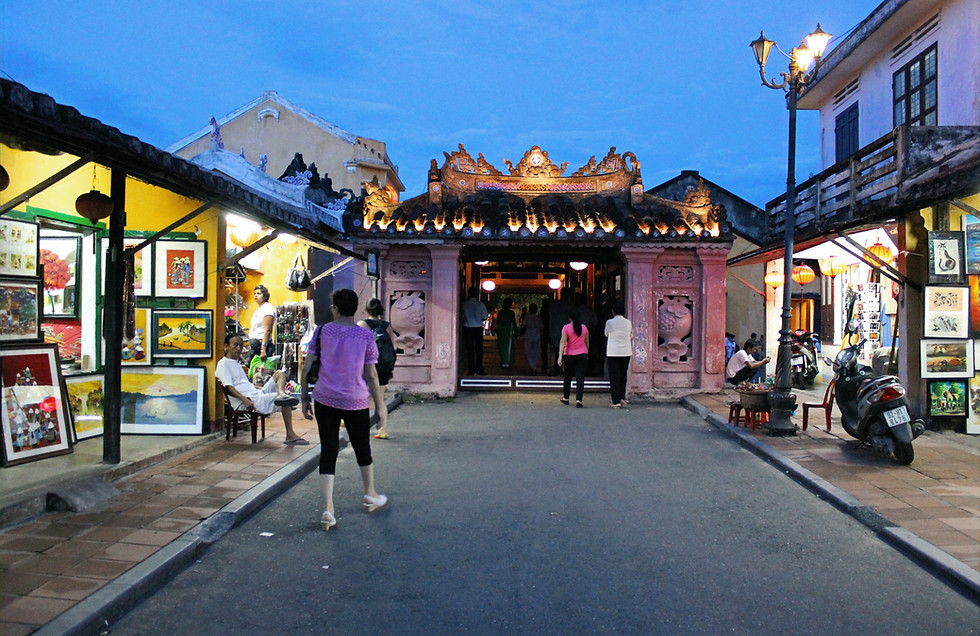
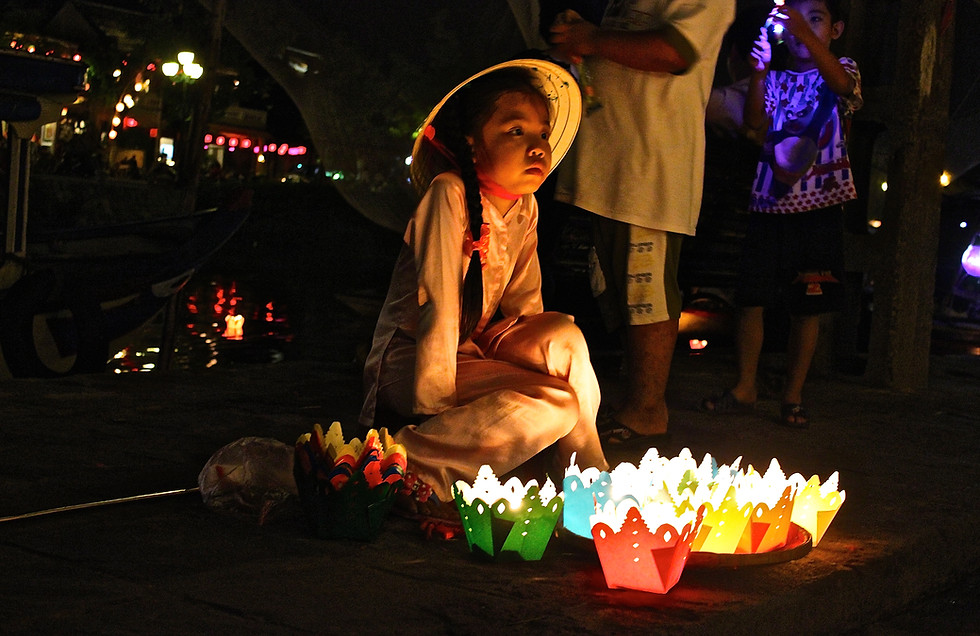
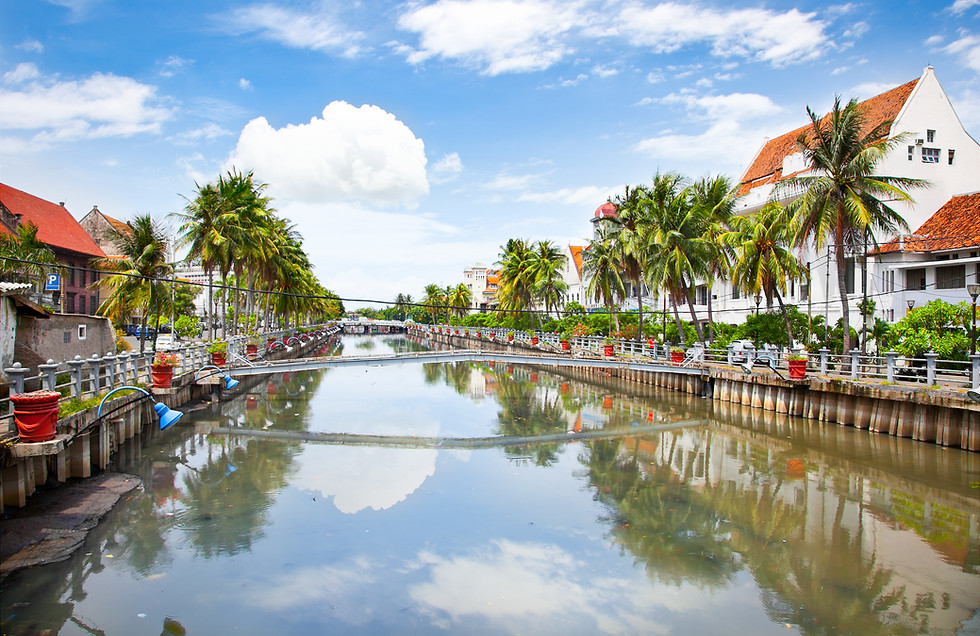
From Ha Long Bay we made our way to Hoi An. This delightfully historic and colour-soaked town is another UNESCO World Heritage Site, and perhaps one of Vietnam’s most enchanting. It was definitely my most favourite part of our trip! Largely free from the noise, traffic, and pollution of the 21st century, Hoi An invites one to slow down. Its architectural treasures, lantern-lined streets, quiet residential lanes, and lively riverfront are best explored by bicycle, at an unhurried pace that the town seems to insist upon. Three days passed far too quickly in this charming place, a town that lingered long after we left, like the glow of its lanterns at dusk.




FOURTH STOP: HUE
Close to Hoi An and set among low, forested hills, the hauntingly beautiful tomb of Emperor Khai Dinh stands as a quiet, contemplative counterpoint to the grandeur once associated with Vietnam’s former imperial capital, Hue. Hue itself carries the weight of history with a particular solemnity. Once the seat of emperors, the city suffered extensive bombardment during the Vietnam War, and abandoned ruins still lie scattered across the landscape, mute reminders of a turbulent and painful chapter. Here, beauty and loss sit uncomfortably close, lending Hue a stillness that feels both reverent and reflective.
FIFTH STOP: MEKONG DELTA
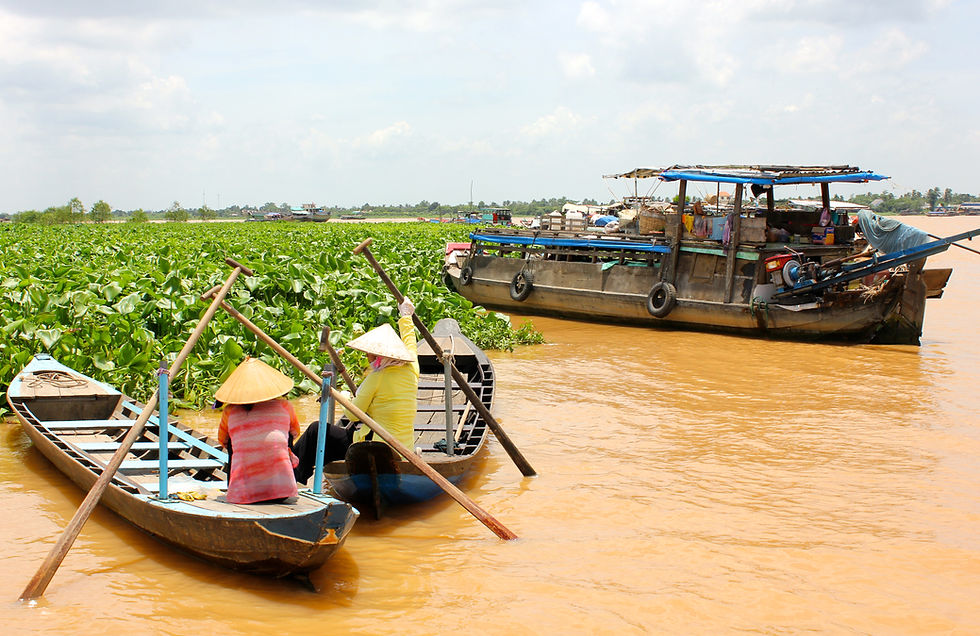
From Hue, we set off towards Ho Chi Minh City, along the Mekong River. A vast, living maze of rivers, mudflats, and marshes, the Mekong Delta is the lifeline of hundreds of communities across southern Vietnam. Fed by the mighty Mekong River, the delta unfolds in a tapestry of floating markets, emerald rice paddies, and brightly coloured villages, all shaped by the steady rhythm of water. Easily reached from nearby Ho Chi Minh City, this is a landscape best experienced slowly. Our boatman handed us traditional conical hats to shield us from the unrelenting sun as we paddled along narrow waterways, a small, practical gesture that felt deeply emblematic of life here, where water, work, and community flow seamlessly together.



FINAL STOP: HO CHI MINH CITY
A short journey from Ho Chi Minh City took us to the Cu Chi Tunnels, an experience that was as intense as it was sobering. Crawling through parts of this vast underground network brought the realities of the Vietnam War sharply into focus, revealing the ingenuity, resilience, and sheer endurance of those who lived and fought below ground. More than a historical site, Cu Chi is a powerful reminder of the human cost of war, leaving us with a deep sense of respect and quiet unease that lingered long after we returned to the city.
We did not spend enough time in Ho Chi Minh City, a place with such an infectious energy, but perhaps that only sharpened its impact. The city hums with a confident, contemporary rhythm: leafy boulevards lined with cafés, the aroma of strong Vietnamese coffee drifting through the air, and tucked-away jazz bars where music spills softly onto the street long after nightfall. There is an ease here, a sense of forward momentum layered over a complex past, that makes the city feel both grounded and restless in the best possible way.
Leaving Vietnam felt unfinished, but it also offered the perfect excuse, and promise, to return again soon.

