VENICE
A floating labyrinth of art, history, and heart, Venice isn’t a place you simply visit, but a feeling that follows you home. In late 2018, I wandered through Italy for seven weeks, a little off-course and unsure of who I was or what I wanted to do in life. Venice, with its gelato, gondolas, and canals for getting wonderfully lost, was the perfect distraction.


Stepping out of Santa Lucia station, I was greeted by clear blue skies and the shimmering Grand Canal, a welcome that felt almost cinematic.
Naturally, my very first stop was the nearest gelateria. I firmly believe that in Italy, gelato should be eaten at least once a day. It’s cheerful, delicious, surprisingly inexpensive, and the perfect excuse to chat with locals and practice a little Italian (though I’ll admit, very little of it stayed with me by the end of the trip! I simply do not take to new languages). And, just so you know I’m not exaggerating, I happily polished off ten scoops in three days, mostly gianduia (that dreamy chocolate-hazelnut) and amarena (tart sour cherry perfection).
I stayed in a tiny bed and breakfast just ten minutes from Piazza San Marco. My room was roughly the size of a generous cupboard, and every morning at 6AM the solemn toll of church bells became my alarm clock. But with a window overlooking Venice’s rooftops and quiet canals, and barely a moment spent indoors anyway, it felt like the perfect little haven.


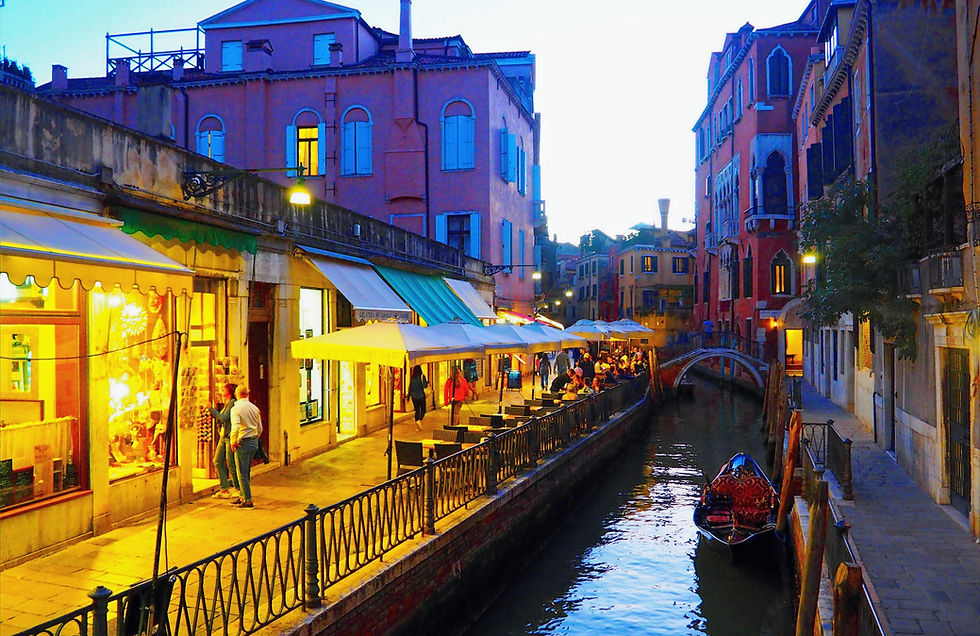
Venice is an archipelago of 118 islands, separated by around 150 canals and linked by more than 450 bridges, all stitched together by charming campos (intimate little squares that elsewhere in Italy are called piazzas), perfect spots for the weary wanderer to pause and people-watch. Beneath the beauty lies remarkable engineering: Venetian buildings stand on thousands of oak and pine piles driven deep into water-logged soil, where the lack of oxygen keeps the wood from decaying, a quirk of nature that has held the city aloft for centuries. Perhaps that’s why both the whimsical and the wistful are drawn here, to this so-called City of Love, where romance, mystery, and quiet introspection coexist on every bridge and in every shadowy alleyway.
One of my first stops was the grand Piazza San Marco, a square that has echoed with history for over a thousand years. The stunning Basilica di San Marco, often called the Chiesa d’Oro (Church of Gold), is one of the finest examples of Italo-Byzantine architecture in the world, its exterior adorned with opulent mosaics and panels depicting stories from the Old and New Testaments. By night, Piazza San Marco feels almost theatrical, its façades glowing under soft lights. By early morning, it transforms into a lively battleground ruled by pigeons, a reminder that even the most majestic places are not exempt from flying annoyances.

Directly opposite the Basilica stands the Campanile di San Marco, Venice’s iconic bell tower, rising 98.6 metres above the square. In 1902, it unexpectedly collapsed, miraculously, the only casualty was the caretaker’s poor cat, but it was faithfully rebuilt “as it was, where it was,” and today offers spectacular views over Venice’s rooftops and winding canals. Beside it, the elegant Biblioteca Marciana, a Renaissance masterpiece named after Venice’s patron saint, St. Mark, adds a scholarly grace to the square’s grand ensemble.
Adjoining the Basilica, close to the water’s edge, stands the Palazzo Ducale, a masterpiece of Venetian Gothic architecture. Though best known as the residence of the Doge, it also housed the Republic’s most important government offices and courts of justice, serving as the political heart of Venice until the fall of the Venetian Republic in 1797.


Built on an ancient, marshy lagoon in the Adriatic, Venice is a city best experienced from the water. Whether you’re gliding in a gondola, zipping along in a water taxi, or hopping on a vaporetto, a journey down the serpentine Grand Canal is essential.
I took a water taxi. As we cruised along, history revealed itself along the banks, grand palazzi from centuries past, elegantly adorned churches, sculpted figures frozen mid-story, and even a sixth-century pescheria bursting with colour, fragrance, and Venetian ladies calling out the day’s freshest catch. Magnificently designed façades, many once noble palaces and now elegant museums, rise from the water, especially around the San Geremia area where history feels close enough to touch.
And then, a quintessential Venetian tableau: gondolas gently at rest, while the graceful silhouette of San Giorgio Maggiore watches over the lagoon, timeless and serene.

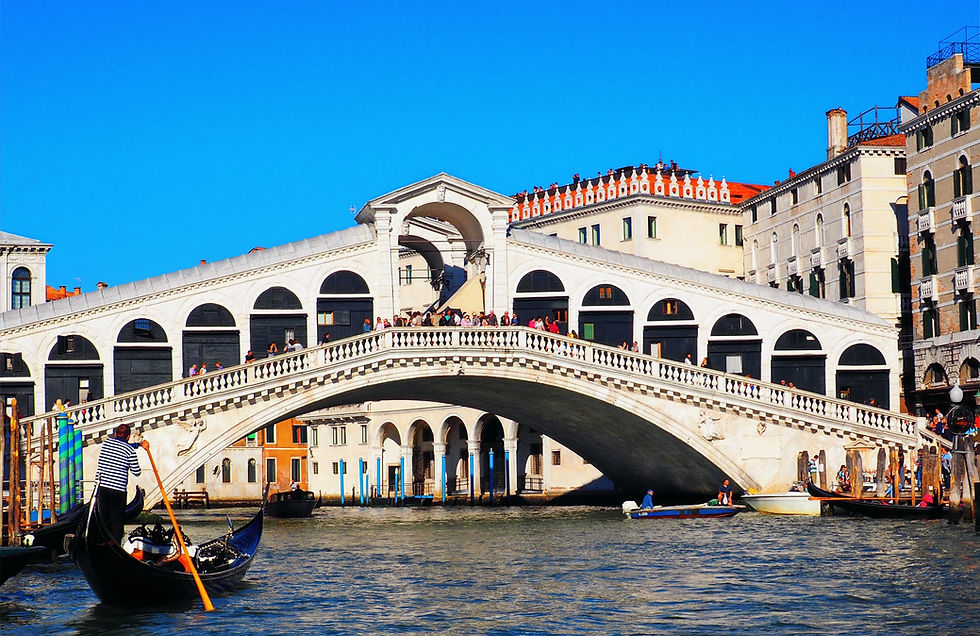
In the commercial heart of the city, the iconic Rialto Bridge offers a beautiful view of the Grand Canal, though be warned, it’s usually packed to the point where knees and elbows become part of the strategy. For a slightly calmer experience, I crossed the Ponte dell’Accademia toward the Gallerie dell’Accademia, home to one of the richest collections of Venetian art, much of it assembled during Napoleon’s time.
Since my appreciation of art is only marginally better than my understanding of physics (to put this in context, I failed first year physics in University, which was very humbling), I chose instead to explore the neighbourhood’s quieter charms, treating myself to a Bellini and carpaccio (fresh slices of beef or salmon dressed with lemon, olive oil, and variously, truffle mushrooms or Parmesan). Just nearby, the lovely Campo Santo Stefano felt like a welcome pause: artists painting at easels, musicians filling the square with soft melodies, and restaurants serving Venetian classics like risotto al nero di seppia (squid-ink risotto), fegato alla veneziana (liver and onions), and risi e bisi (rice and peas), simple comforts with centuries of tradition behind them.


Towards the end of my Venice adventure, I set off on a day trip to the colourful twin islands of Murano and Burano.
Murano is renowned worldwide for its glassmaking tradition, a centuries-old craft where furnaces glow and master artisans transform molten glass into shimmering chandeliers, delicate jewellery, and whimsical sculptures.
Burano, meanwhile, is a burst of joy on the horizon, a lace-making island strung together by canals and rows of brightly painted homes, each one more cheerful than the last. With far fewer tourists than the main city, wandering through these colourful, sun-washed streets felt wonderfully relaxed, a perfect escape for slow strolling, spontaneous photography, and soaking up the charm of Venetian life beyond the crowds.

Returning to Venice, it was abundantly apparent to me that four days was nowhere near enough, I wanted more time to wander her streets, linger on her bridges, and keep uncovering her quiet corners. For anyone wondering, travelling solo here felt incredibly easy and safe. Venice welcomes you like an old friend, even if it’s your first time meeting her. This is a city I know I’ll return to. But in the meantime, I had a train to catch back to Rome!