LADAKH
Julley from Ladakh, where the sky seems impossibly close and the mountains feel like old friends. At every pass and valley, the air is thin and clear, the silence speaks, and even the colours seem sharper against this high-desert light.


Our flight to Ladakh was at 5:30 am. We were sleep-deprived and had been on Diamox for two days, in preparation for the ginormous leap in altitude we were about to subject our bodies to. In truth, the tiny tablets did little to appease my fears, which were further amplified by the extreme buffeting our tiny plane endured as it made its way through the valley before landing.
Ladakh, at 3,500 metres, is dominated on all sides by mountain ranges: the Himalayas, Karakoram, and Zanskar. In its higher reaches, even the valleys sit at altitudes of 4,000 to 5,000 metres and can sustain almost no vegetation, or much else, for that matter.
Many moons ago, Ladakh served as a vital link between Central Asia and India, acting as a gateway for trade along the Central Asian Silk Route from China to Europe. Trade was once Ladakh’s lifeline, and traders were virtually her only contact with the outside world. In more recent times, she has opened up to tourism, and travellers from all walks of life can now be found exploring her awesomeness.


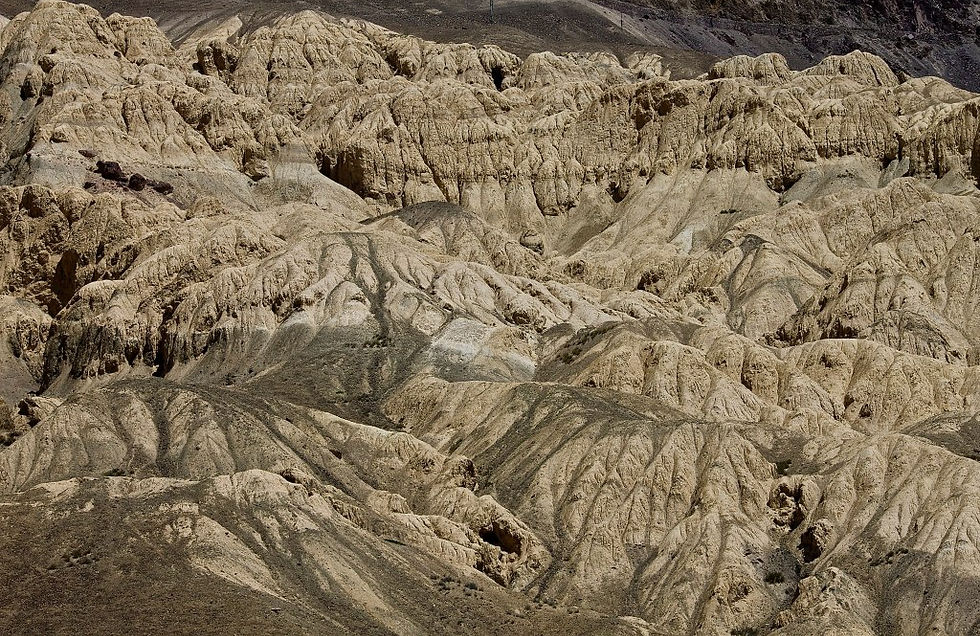
Our driver, Prakash, turned out to be our travel Sherpa as well, guiding us to our destinations with oddball factoids, amusing opinions, and impromptu history lessons. Along the way, we saw evidence of major geological processes etched into the mountains. This transported us back to long-forgotten classrooms and reminded us that some of these rocks were once sediments from a left-behind ocean. Others are rocks from the Indian tectonic plate, whose movements are still causing the Himalayas to grow. Together, they paint Ladakh’s mountainous character in hues of brown, orange, and even magenta.
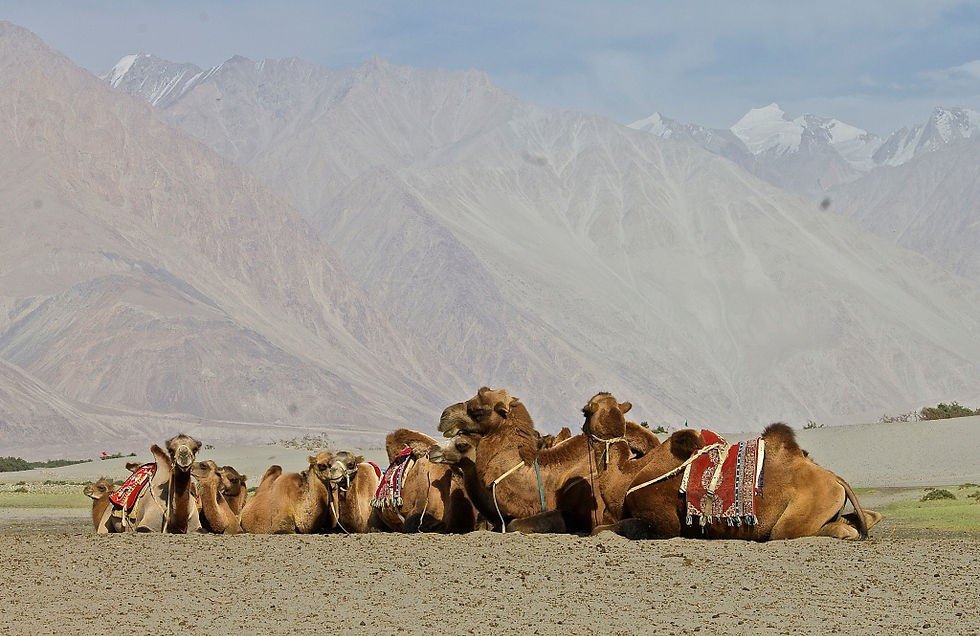
From Leh, we travelled to Khardung La Pass, which stands at 5,602 metres and is often described as one of the highest motorable passes in the world. We stayed there for a very conscious 25 minutes, oxygen being a rare commodity at that altitude. From there, we descended into the Nubra Valley. Sitting at a lower altitude than Leh, Nubra has a more moderate climate and is therefore surprisingly fertile and lush. It is also home to a population of Bactrian camels, left behind after the trade routes ended; the animals now attract crowds like gravity attracts falling objects.




Throughout our travels, the Shyok and Indus rivers and their tributaries kept us company. Once or twice, we deigned to step into their freezing waters, a refreshing reminder that clean, fresh-water rivers still exist.
The architecture of Ladakh’s monasteries, or gompas, fits snugly into the mountainous terrain, almost imitating its natural shapes. We visited Lamayuru, believed to be one of the oldest gompas in Ladakh. Thought to have been built in the 10th century, it now belongs to the Red Hat order of Tibetan Buddhism. Not far from Lamayuru are unique rock formations collectively known as Moonland. Once part of a lakebed, they resemble a distinctly lunar landscape that stands out oddly against the rest of the terrain.
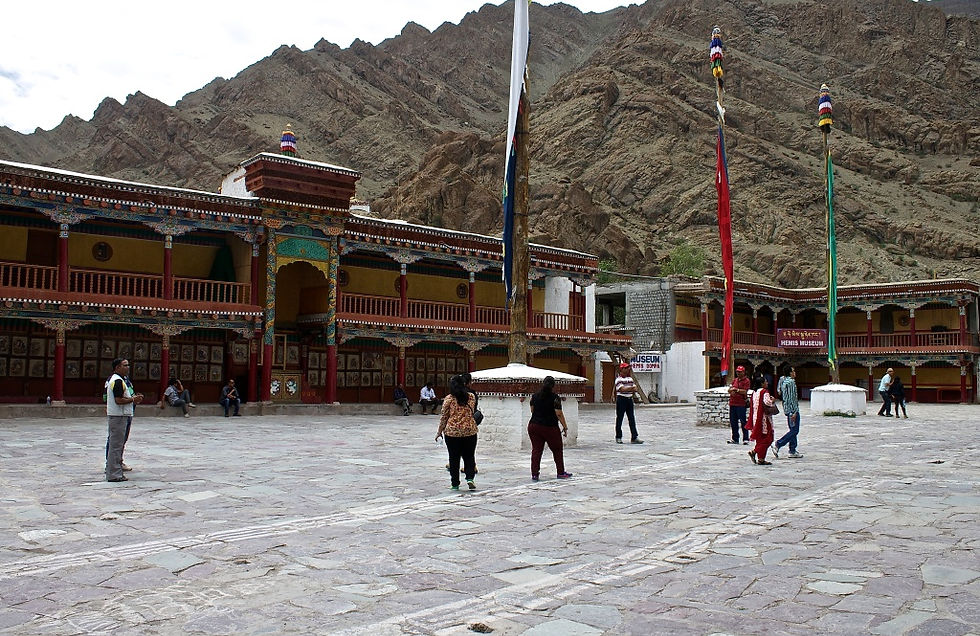
Of the six gompas we visited (Lamayuru, Alchi, Thiksey, Tsemo, Hemis, and Diskit) Hemis was my favourite. Built in 1630 on the banks of the Indus, tucked into a steep gorge at the base of the Stok mountain range, it is downright beautiful and feels like an oasis of peace.



Ladakh’s towering mountains and dramatic scenery assailed my senses. I spent the entire trip somewhere between disbelief and imagining what an ant might feel like in the human world. Even after returning to a state of relative normality, I still cannot quite find the words to describe Ladakh, so I’m going to stop trying.
I will say this, however: they could have shot Lord of the Rings there.
Go see it for yourself. Now.


