JEJU
In Jeju, the night sky feels wider, the sea sounds deeper, and the old lava caves carry echoes of a time before memory. For me, this island became a place of first wonders: untamed landscapes, nuanced stories, and the gentle rhythm of life on Korea’s largest isle.

The combined force of three massive volcanic eruptions, occurring between 1.2 million and 300,000 years ago, brought South Korea’s largest island, Jeju, into existence. Located south of the Korean mainland, between China to the west and Japan to the east, Jeju is also known as the Island of the Gods, and with good reason.
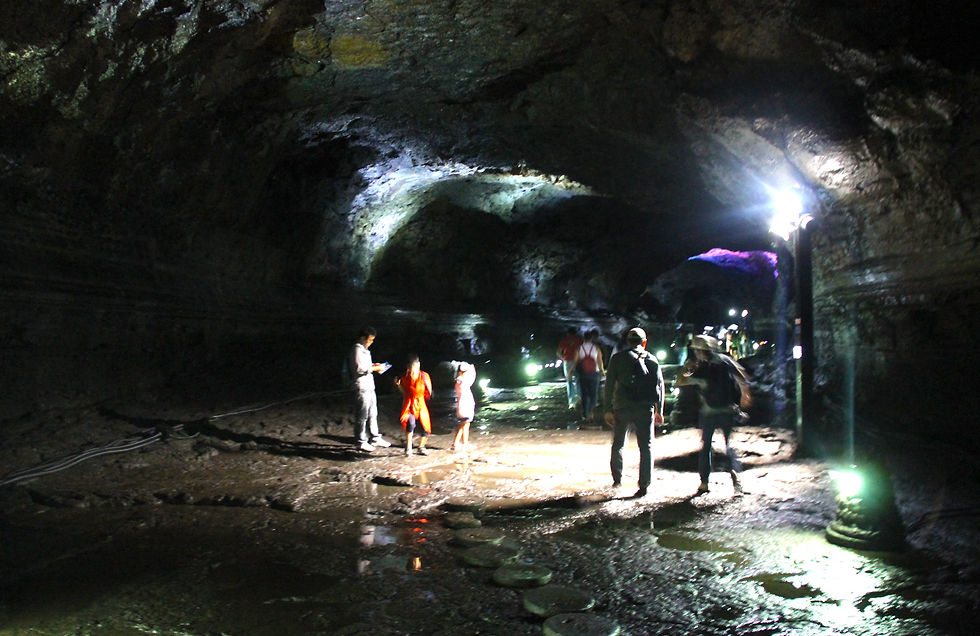
Unlike many mainland Koreans, who trace their origins to Dangun, the demigod born of a deity and a bear-turned-woman, the indigenous people of Jeju have their own distinct origin myths: of the cosmos, the island, and its first human inhabitants. The last of these tells the story of three demigods, Ko, Yang, and Bu, who emerged from deep volcanic caves, or lava tubes, once believed to lead to the sacred Underworld. They married three princesses from a distant land, possibly Japan, and their union is said to have laid the foundations of the Tamna Kingdom, from which Jeju’s unique culture emerged.


Oddly enough, much like its myths, many things in Jeju seem to come in threes. There is samda, or the “three abundances” of wind, rock, and women; and sammu, or the “three absences” of thieves, gates, and beggars. More notably, Jeju was once known as the “island of three misfortunes,” owing to its high mountains, harsh winds, and unproductive soil. Yet Jeju’s crowning glory in the realm of threes is unquestionably its three UNESCO World Natural Heritage sites: Hallasan National Park, Seongsan Ilchulbong, and the Geomun Oreum Lava Tube System. Access to some of these sites depends on one’s level of physical fitness, but they are breathtakingly beautiful and well worth the visit.
Jeju’s tourism economy is built, in part, on the distinctiveness of its culture and its extraordinary natural diversity. In 2011, Jeju was named one of the New 7 Wonders of Nature, taking it a step closer to its aspiration of becoming a World Environment Capital. Yet, even as proposed development plans, particularly the construction of a naval base, continue to cast a long shadow over the island, the people of Jeju remain determined to uphold their motto: “First conservation, then development.”



It would be remiss of me not to give a special shout out to "the diving grannies" of Jeju (this was one of my most favourite parts of the trip).
From the depths of the Yellow Sea, a dark figure rises, silhouetted against the afternoon sun. With quick, short strokes, she makes her way to shore, dragging a basket behind her with practised ease. Soon, more figures appear, steadily nearing the coastline and announcing the arrival of Jeju’s legendary “diving grandmothers.”
In a remarkable display of skill, endurance, and ingenuity, not to mention matriarchal strength, the haenyeo, or women divers, have been scouring the ocean floor around South Korea’s Jeju Island for generations. Free-diving without breathing equipment, they harvest marine resources such as abalone, sea urchins, octopus, and conch. Historically, this was not a profitable activity, largely due to high taxes, and was therefore considered unsuitable as a livelihood for men. But in the 18th century, an inspiring group of women realised that they were exempt from these taxes. It was a game changer: what began as a loophole soon became a way of life.
Haenyeo typically begin diving in early adolescence. Advanced divers travel by boat to deeper waters, while the shallower coastal areas are reserved for elderly or physically frail haenyeo who gather shellfish closer to shore. The profession is rooted in principles of ecological sustainability, including re-seeding programmes, limits on the number of diving days, and monthly dives dedicated to collecting marine waste. By choosing not to use breathing equipment, the haenyeo naturally limit their dive time and harvest, helping to prevent overfishing.


This female-dominated profession has given rise to a uniquely structured community and a deep body of knowledge about Jeju’s marine environment. Today, however, it is in imminent danger of disappearing. Most remaining haenyeo are over the age of 55, with younger women drawn instead to more secure and promising opportunities. Modern fishing methods, aquaculture, and a decline in marine resource stocks have further contributed to the profession’s decline. At present, around 100 haenyeo collectives remain along Jeju’s coastline, though the number of registered divers has fallen to fewer than 5,000.
Jeju is sometimes called the “Island of Women,” largely because of the haenyeo and their long-standing economic and cultural influence, as well as the island’s historically high female population. The people of Jeju deeply value the haenyeo tradition as a form of indigenous marine stewardship, eco-feminism, and benefit-sharing. Their culture and profession play an important role in Jeju’s aspiration to become a World Environment Capital. Yet, despite this recognition, within a few decades the story of the haenyeo may survive only in history books.


Jeju’s unique status as an autonomous province made it a fitting location for the 2012 World Conservation Congress (the primary reason why I was in Jeju), organised by the International Union for Conservation of Nature (IUCN) that September. The delicate balance between development and conservation dominated this “Environmental Olympics”, a double-edged sword with which the people of Jeju are all too familiar.
As I look down at the island from my tiny Korean Air-branded flying bucket, I find myself lamenting the fact that I did not have enough time to explore it more fully. Somewhat unrealistically, I also hope that Jeju, and the determination of its people, will remain unchanged in the years to come.